
Thinking about filing a disability claim but not sure you are qualified for benefits?
Are you overwhelmed with the paperwork after filing a claim?
Has your claim been denied?
If so, I can help you. Get expert advice from an experienced disability lawyer about whether you are qualified to receive disability benefits. You don’t have to navigate the claims process alone; help is available. Find out what you need to overturn a denial of benefits.
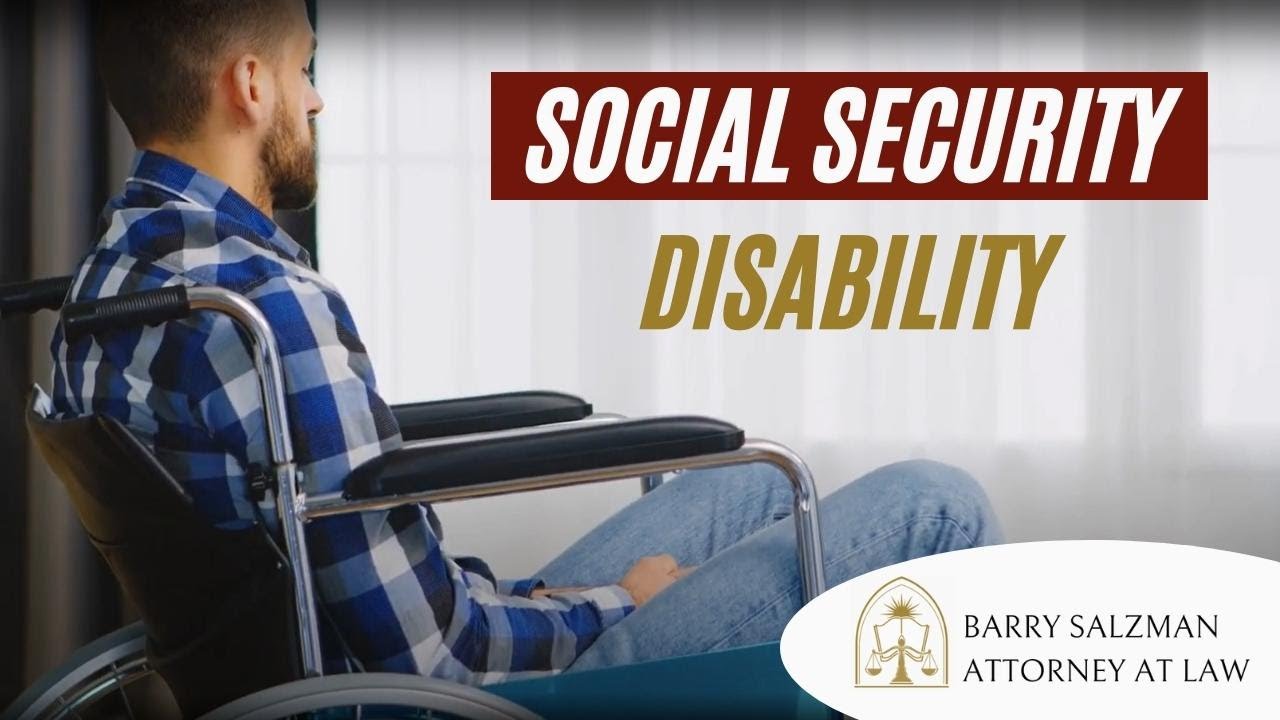
Overview of Social Security Disability Benefits
The Social Security Administration administers two benefit programs: Disability Insurance Benefits (DIB) and Supplemental Security Income (SSI).
DIB includes benefits for your children if you are disabled, benefits for your survivors, and benefits for certain disabled children. DIB requires that you have sufficient earnings credits through the payment of social security taxes on earned income. Without sufficient earnings credits, you are not insured for DIB.
SSI is a welfare benefit that is not based on whether you have earned sufficient credits or whether you have ever worked at all. SSI requires the same proof of disability as with DIB but also requires that your financial resources be quite limited. SSI also provides benefits for disabled children when the parents have limited financial resources. The basis for determining disability in children is very different than the basis for determining disability for adults.
Eligibility to Make a Claim for Disability
You are considered “insured” for DIB if you are below age 24 and have at least 6 earnings credits in the 3-year period before you became disabled; if you are between age 24 and before age 31 and have credits for half the years between age 21 and the date you became disabled; and if you are age 31 you need 5 years of credits in the 10 year period before you became disabled. For SSI eligibility, a single person must not have financial resources in excess of $2,000; married persons cannot have financial resources in excess of $3,000. Neither your home nor one automobile is considered a “countable resource”, but virtually anything else of value is considered. If you are married and your spouse works, your spouse’s income is considered available to you and is counted as a resource unless you are living apart.
Monthly DIB benefits are based on the level of your earnings over the period you have worked. SSA generally uses the highest 5 years of your past earnings. SSA then uses a formula to calculate each person’s benefit amount. Monthly SSI benefits are referred to as the federal benefit rate, which is established each year and is the same amount for everyone. The SSI benefit rate is currently $841/month. This figure can be reduced by any countable income you may be receiving after you are found disabled.

How to Apply for Social Security Disability Benefits in St Petersburg, FL?
You may file your application by contacting your local SSA office, which will provide the application forms, or you may take your application over the phone. You may also file your application online at www.ssa.gov and follow the instructions. You may also get information about your earnings credits and the monthly amount of your disability benefit by creating an online MySSA Account. Instructions are found on the SSA website.
How Does SSA Determine Whether You Are Disabled?
We call it the 5-step sequential evaluation process. Here's how it works:
Has the claimant engaged in a substantial gainful activity (SGA) since becoming disabled? SGA is an amount of earned income established each year by SSA as the amount which will render you ineligible for benefits because you earn too much money to be disabled. In calendar 2022, that was any amount over $1,350/month for non-blind claimants. If you have earned more than that amount after the date you say you became disabled, your claim must be denied without further consideration of the evidence.
Does the claimant have one or more medically determinable conditions that can be considered a severe impairment? A severe impairment is any physical or mental condition that has been diagnosed by a qualified physician and which causes more than a minimal limitation of the claimant’s ability to perform basic work activities: standing, walking, sitting, lifting, carrying, pushing/pulling, bending, stooping, kneeling, crouching, seeing, hearing, speaking, understanding, remembering, using judgment, and responding appropriately to supervisors, co-workers, and the public. Medical records are essential at this point. No matter how bad you hurt or what limitations you may have, you must have medical records that document a diagnosed medical condition that could produce the problems you allege.
Does the claimant have one or more medically determinable conditions that meet or equal to SSA’s Listings of Impairments? SSA has produced a catalog of various medical conditions and prescribed the medical criteria that must be found in your medical records to consider you disabled solely based on medical considerations. These listings are difficult to meet. No more than 20% of all persons receiving benefits have “listing level” impairments. If you don’t meet a listing, your case goes on to step 4 and 5. Benefits are automatically granted if you meet the listing criteria without further consideration of steps 4 and 5.
What is your residual functional capacity? This means what you can still do despite your disabilities. This is a function-by-function assessment that considers exertional and non-exertional abilities. Exertional capacity is defined in broad categories of heavy, medium, light, and sedentary work activity. Non-exertional abilities include matters such as seeing, hearing, speaking, understanding, remembering, using judgment, and responding appropriately to supervisors, co-workers, and the public. SSA cannot determine that you are not disabled if you do not have the ability to engage in sustained work activity. SSA must determine that you (1) can get through a normal 8-hour work shift with only customary work breaks, (2) can attend work on a regular and consistent basis, and (3) can maintain an acceptable level of concentration, persistence, and pace for work activity. You will not be found disabled if you have the residual functional capacity to perform any of the work you have performed over the past 15 years. You will not be found disabled if you can perform other work. Determining whether you can perform other work involves other considerations in step 5.
At step 5, SSA determines whether you are capable of other work based on your residual functional capacity. SSA has produced a chart referred to as the Medical-Vocational Guidelines that directs how this decision is made. The most critical factors are age, education, and whether your past work has been skilled, semi-skilled, or unskilled. Under the age of 50, the issue is simply whether you have the ability to perform any simple, routine, unskilled job in the national economy. SSA does not have to show that there are job openings for you or that you will be hired. Over the age of 50, the standard of disability becomes easier to meet if you are limited to sedentary or light work and cannot perform your past work.
This discussion has barely scratched the surface of the issues that need to be considered.

Need Help With Your Social Security Disability Claims in St Pete, FL?
If you need a consultation about your claim, Attorney Barry Salzman is here to help. There is no charge for the consultation. His services are based on a contingent fee agreement-no recovery, no fee. Fees are limited to 25% of retroactive benefits only and are subject to a limit of $7,200.
Your claim is important enough to be done right with an experienced attorney. Help is a phone call away.
Practice Areas

Why You Are in Good Hands With Attorney Barry Salzman:
Frequently Asked Questions
What Our Clients Say


Schedule Your Consultation Today
Navigating the bureaucracy of any disability program is complex and frustrating and often ends in denial.
Don't do it alone! Have a dedicated, experienced advocate on your team.
Fill out the form below or give us a call at 727-321-4993.
Read the Latest Articles on Our Blog
What You Should Know About SSI – Continuing Disability Reviews
How Do Benefits From Other Claims Affect Social Security Disability Benefits?